“Quiet Is So Noisy”
Words of a night-frightened child.
She has not yet heard the noise of a room
Left void by an angry lover
Nor a babe’s cry lingering in the ear
Of a mourning mother.
Silence screams for those who fear
Not the night
But inner thoughts.
(BRP 1974)
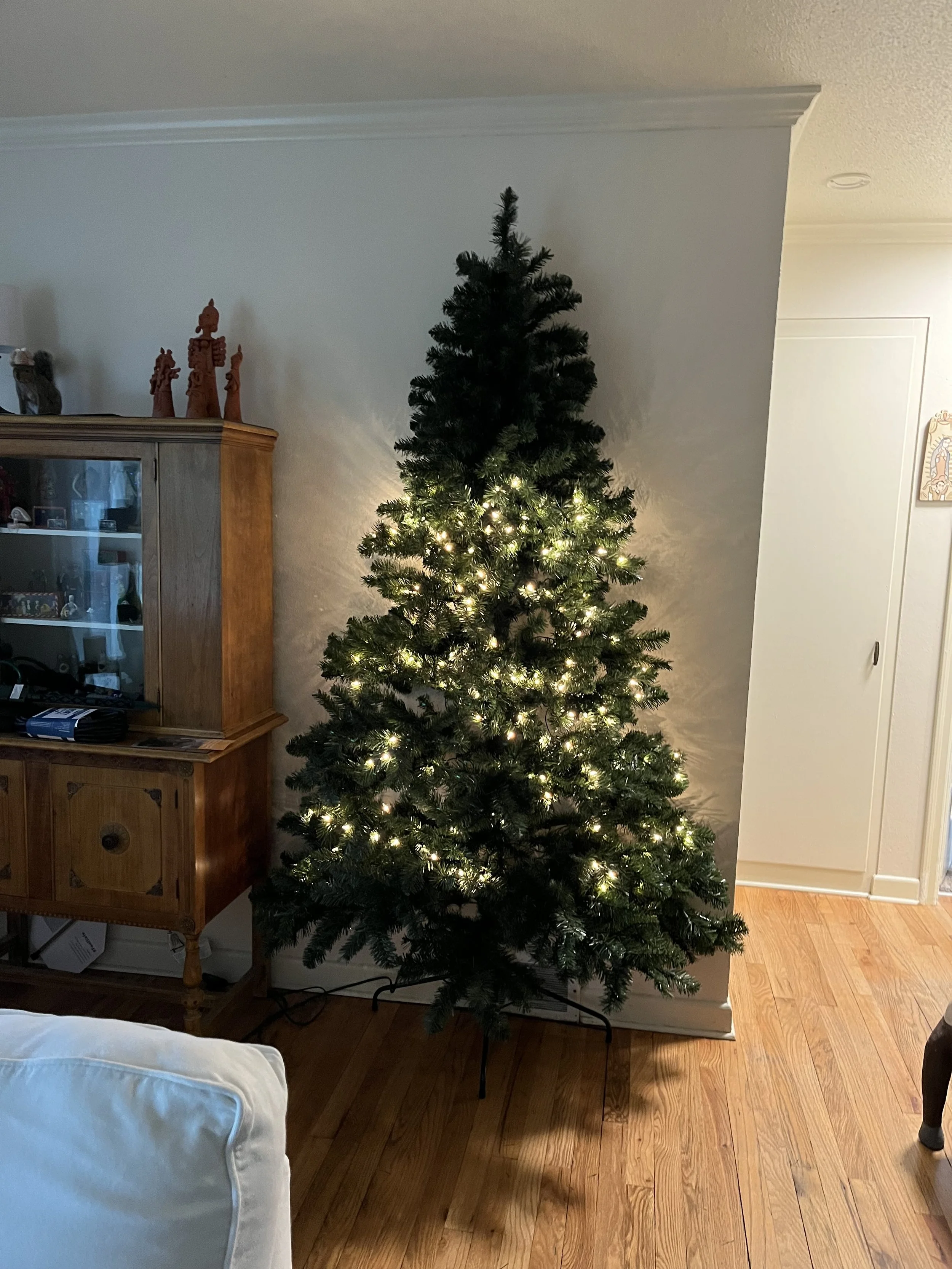
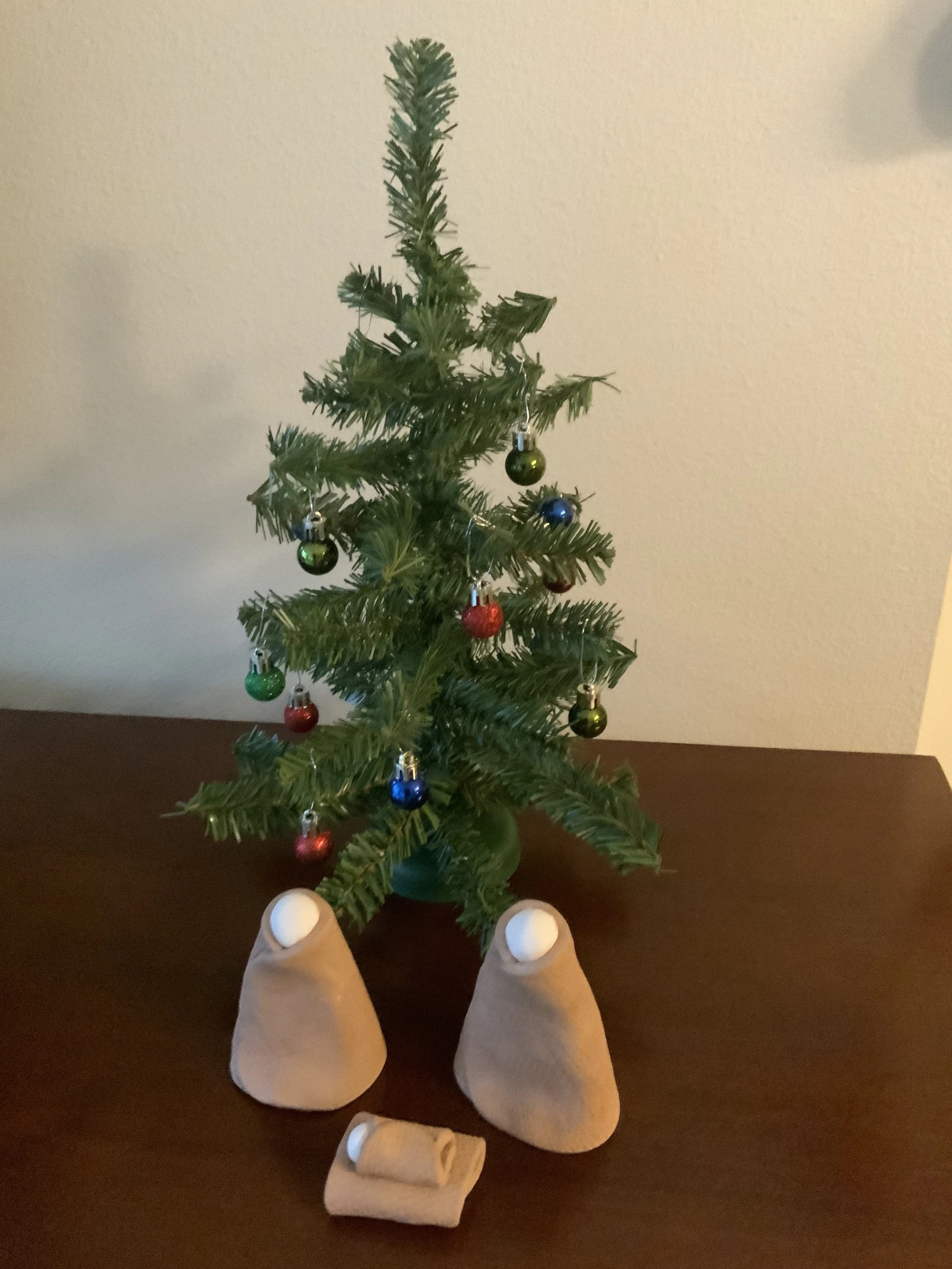
It’s just inside her front door, to the left, this half tree you see in the photo; the tree with lights wired on hardly half the half tree. Our daughter found this gem at the Goodwill store and happily — well, maybe not happily — paid the eight dollars to carry the $300 retail item out the door to her small home not many miles from us. Her thought when she saw it was, “Perfect.”
“I really don’t want a tree,” she has been saying since Thanksgiving. For thirty-five years her husband, Houston, was the source of finding the perfect Christmas tree. Whether Washington state, California, Oregon, Iowa, New York, or New Mexico, he led the way through forest or tree-farm fare for the tree.
Eloquent Houston convinced his people of the perfect find. Once home, he made the gin-and-tonic, chose the music, and settled in his cushy chair while creative Kim fetched ornaments and hangings and began the transformation. Last year, in Santa Fe, the featured tree, music, and festive trappings shouted joy all the way to the wide Coyote fence.
Then came the new year. Then came a series of suggestions that Houston wasn’t well, then came April when the world (and he had friends all around it) lost Houston; when Kim knew the noise of a room left void by the absence of her love. Not an angry lover as my 1974 poem suggested, but the sure absence, the death, that caused St. Augustine to say of a friend, “How can he be gone and I remain here, when he was the other half of my soul?”
At the Goodwill store Kim saw the half tree. She saw that it was half dressed. She knew what it meant to feel half herself. She knew the center of her soul where since April quiet has been so noisy.
Statically, says a 2024 study by the Policy Institute at King’s College London, “one in nine (11%) across the general population are expected to spend Christmas alone. Up from one in twenty fifty-five years ago. Among kids, ages 21-34, one in eleven is expected to be alone on Christmas day.
Interestingly, “the share of people aged 65 and over who said they would spend Christmas Day by themselves has remained the same since 1969 – 15% of over-65s – the number for other demographics has risen. For widows and widowers,” the article suggests, “the holiday season is particularly difficult.”
Shall we say “understatement”?
Do we understand now how the eye of young Kim met the half-dressed half tree in the Goodwill store, and knew a metaphor when she saw one?
Silence screams for those who fear
Not the night
But inner thoughts.
I’m thinking . . . the holiday season is a good time for me to care that for some, quiet is so noisy; that the holiday season can be particularly difficult, that our caring can make a difference.