#18 WORD SERIES: LOST
Lost my mind, got lost, lost opportunity, lost out, lost time, get lost, felt lost, you’ve lost me, lost in thought, lost cause, I’ve lost it. I’ve lost count of how often we use the word, lost.
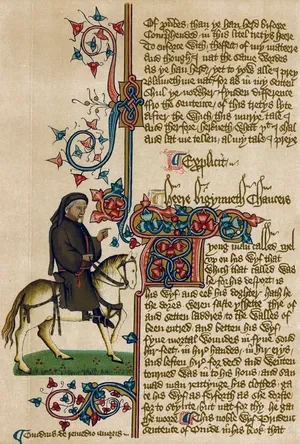
Here, in a 15th century manuscript, a page of Geoffrey Chaucer's best known 14th century work, The Canterbury Tales. It is Chaucer himself in the drawing.
Geoffery Chaucer was a serious man who wanted English to be as important as French and Latin. He served as a diplomat to three British kings and managed to keep his head, which is saying a lot considering the wonts of fourteenth century kings. We remember Canterbury Tales (I’ve lost my copy), his twenty-four mostly bawdy tales attributed to thirty peasants making a fifty-mile pilgrimage from London to the shrine of Thomas Becket at Canterbury Cathedral. Each pilgrim was vying for the prize of a free meal at the Tabard Inn, London, by besting the others by their tall-tale boastings.
Around 1380, in Boece, his serious translation of the 6th century work of Boethius’ philosophy, Chaucer wrote this: “Men do no more fors of the lost than of the hauyinge.”
“no fors of” meant to take no account, to not care. Lady Philosophy was arguing that how we feel about the loss of something reveals how we felt about having it.
This is one of the earliest recorded Middle English uses of “lost,” a word evolved from the Old Norse los, and Old English, losian, which meant to perish, or better, to become trackless.
It’s the difference between having and losing that had my attention lately. I think maybe we can get careless about valuing what we have . . . until it is, well, lost.
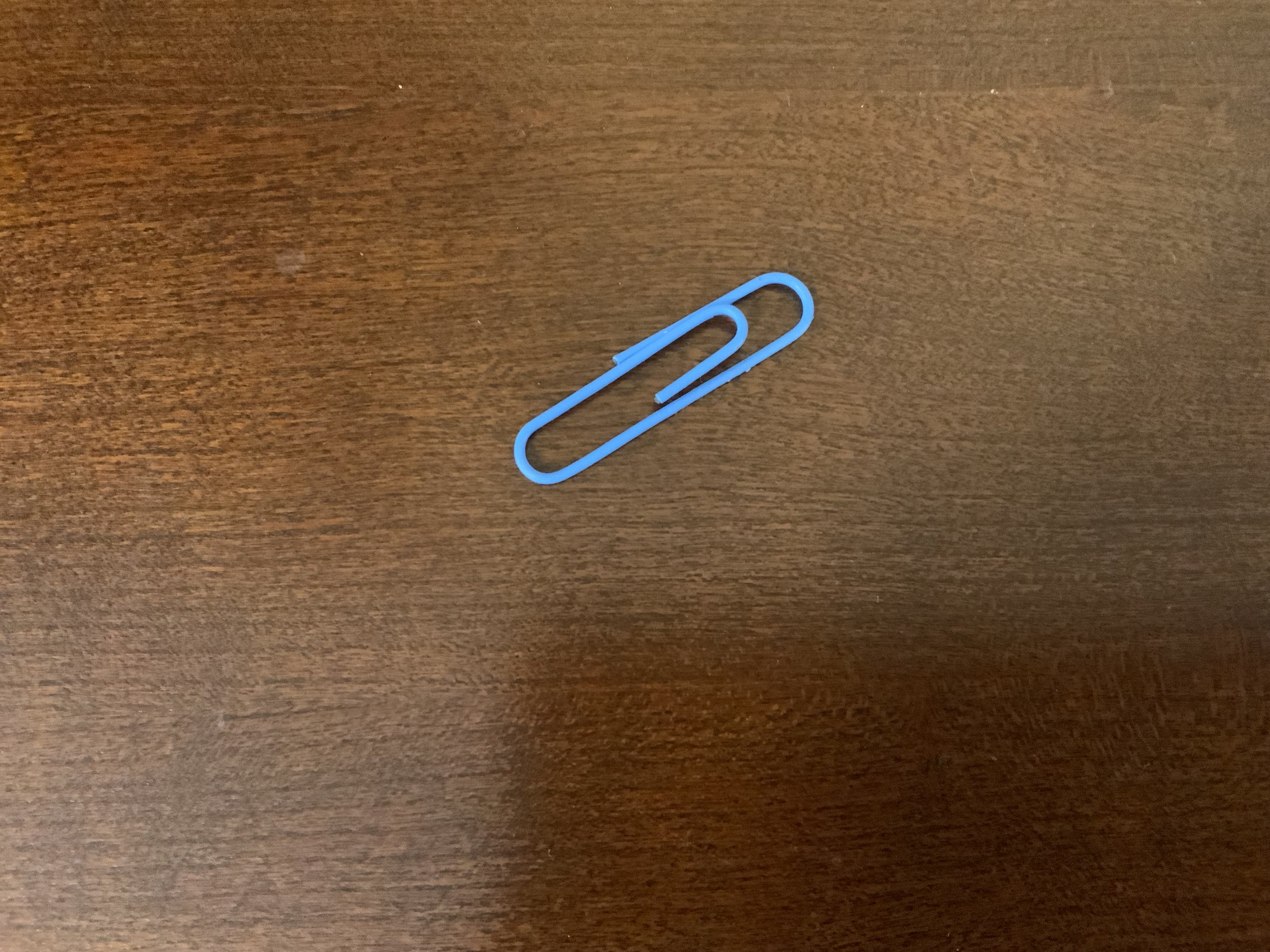
Take this blue paperclip for instance.
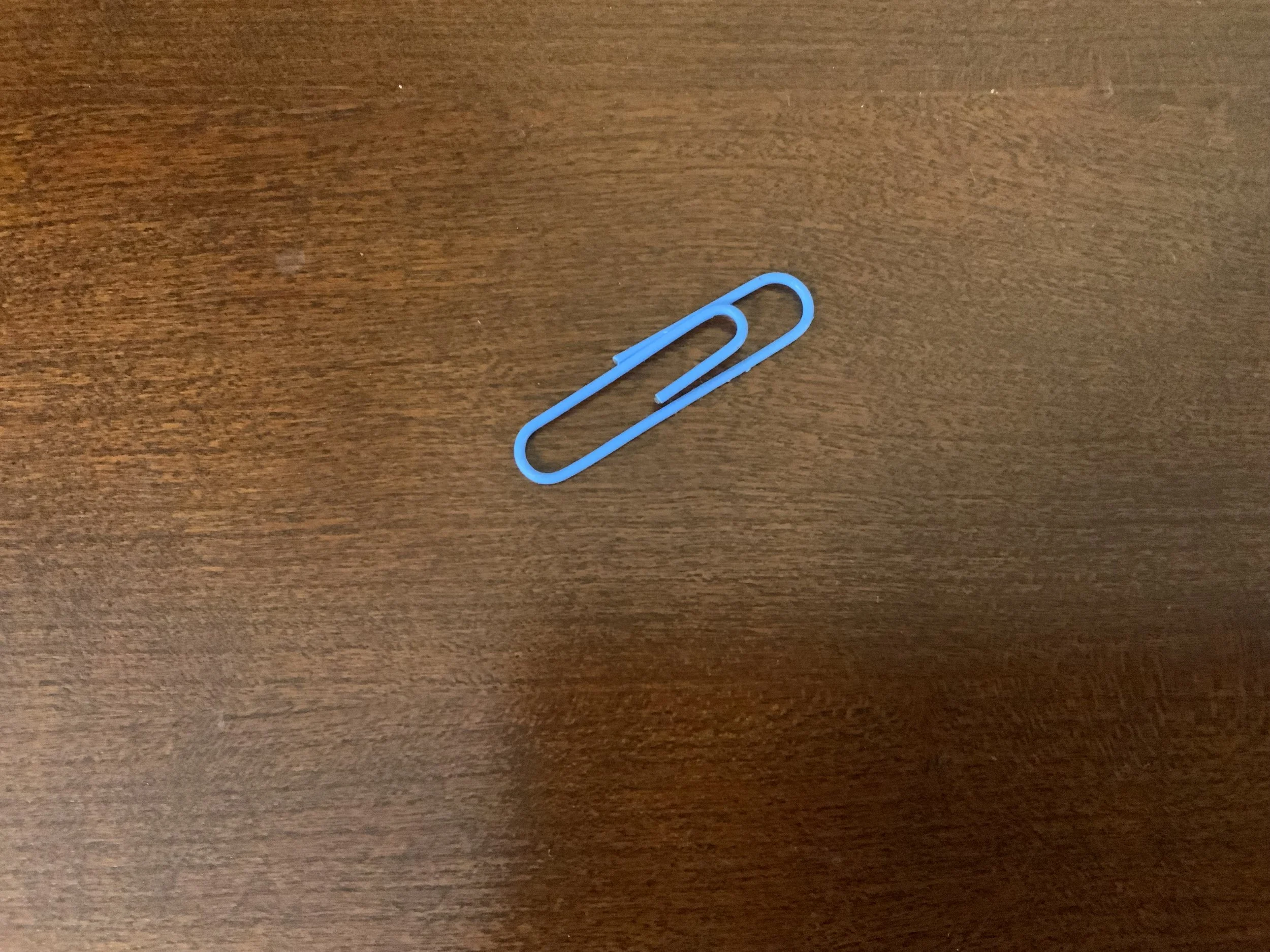
Someone recently lost this in a parking lot where my daughter and I found it. Anytime I find a paperclip, I must write something. Anything. Like this blog posting. It’s nothing but a silly discipline.
“Darn! I lost my paperclip,” the original owner may have said. I have a feeling that the having was thoughtless while the loss meant nothing more than inconvenience. It’s a paperclip.
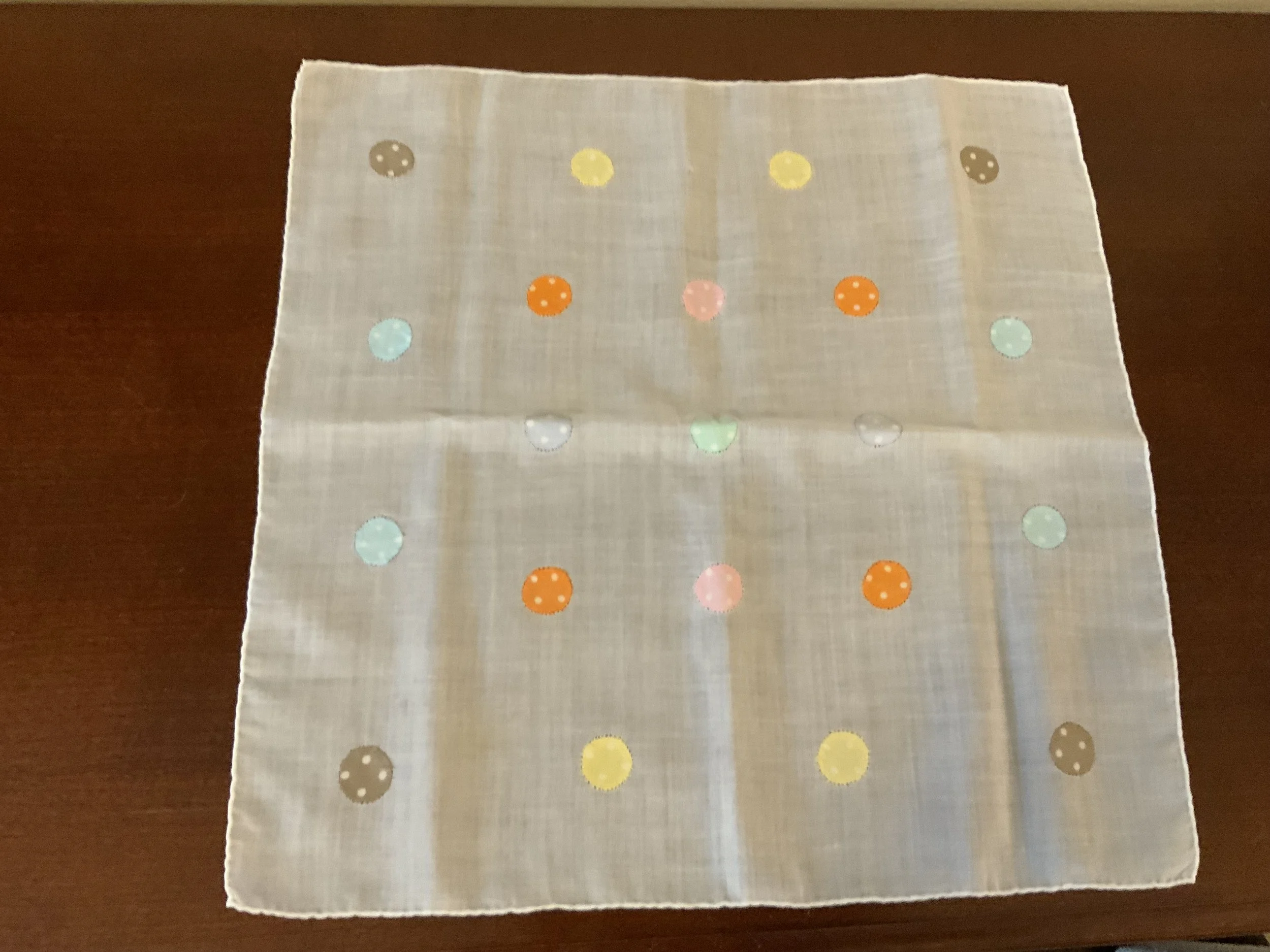
This hanky on the other hand, had to have been more significantly cherished than a paperclip by the person who lost it in the wooded wetlands near our home. My husband found it weeks ago along a trail and draped it over a bush, hoping the owner might find it. Weeks later he lifted it from the bush and brought it home.
In her book, Threads of Life, Clare Hunter wrote, “. . . You cut a length of thread, knot one end and pull the other end through the eye of a needle. You take a piece of fabric, and you think about what you are going to make, who it will be for . . . Then you push your threaded needle in one side of the cloth and pull it out on the other, on and on in rhythmic sewing, until you have made something that matters: a thing of beauty and meaning, an embroidery that holds your spirit fast within its threads.”
“Handmade,” says my stitch-smart friend, and I believe this hanky is, even though a bit of research shows this type of Jacquard stitch was machine copied in the 1950s. I wish you could touch it, the sheer strength of cotton voile, the hand-rolled hem, and the tiny, tiny stitches holding the dots secure. It is a beautiful piece of work. How could it not matter to the one who lost it. I have it, if you know the owner. I will happily return it.
And then this.
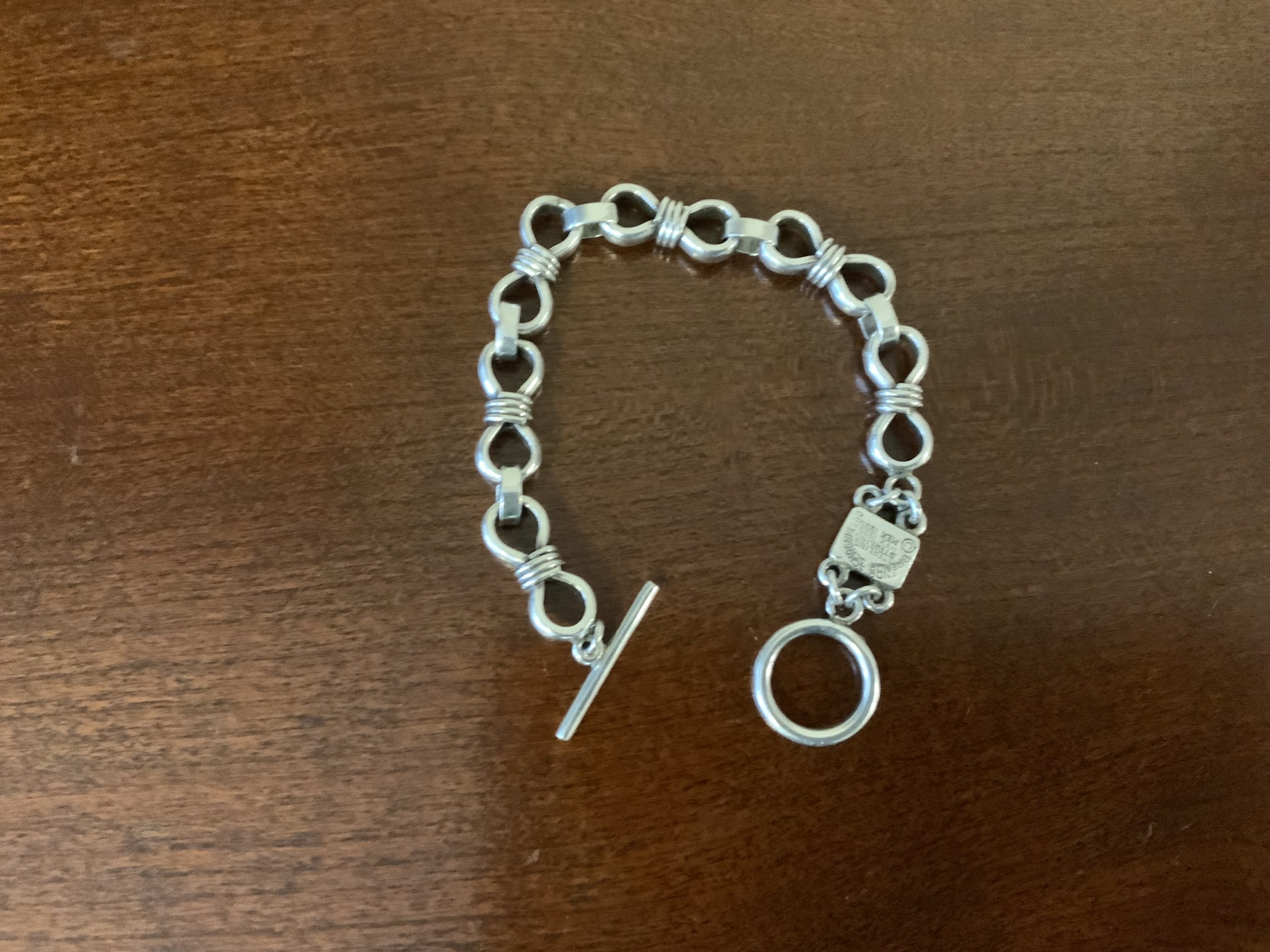
This bracelet belonged to my mother. At least that is what my memory tells me. I could be wrong. I know I didn’t purchase it. Around the time the hanky got hung on a bush, I was wearing this bracelet until I wasn’t. I lost it.
Let me tell you, when I became aware that I had lost it, I knew the difference between Chaucer’s losing and having. When I had this bracelet, I didn’t think much about the having. When I lost it, I was sick with awareness of not having. Who doesn’t know that feeling.
I longed for it. I thought hard about its significance. I retraced my walks where I had worn it. I searched our home, our car, my closet, stairways. I felt the word ‘gone.’
Now, come on. I know the “On the scale of 1-10” argument. This was a bracelet, not a person, not a house lost to fire, but this was significant, and I was heartsick having lost it.
Psychologists have a theory that humans feel the pain of losing something with about twice the intensity of the joy they feel in having first obtained it. Then (so goes the argument) as time passes, a person’s appreciation for an object, or even a relationship, settles into a stable state of value, whether or not they possess the thing. So, maybe Chaucer was right all those centuries ago before the art of psychology was born. The value settles to a sameness whether losing or having. It’s just that when a thing of value is lost, its significance is intensely registered.
Here’s the rest of my story.
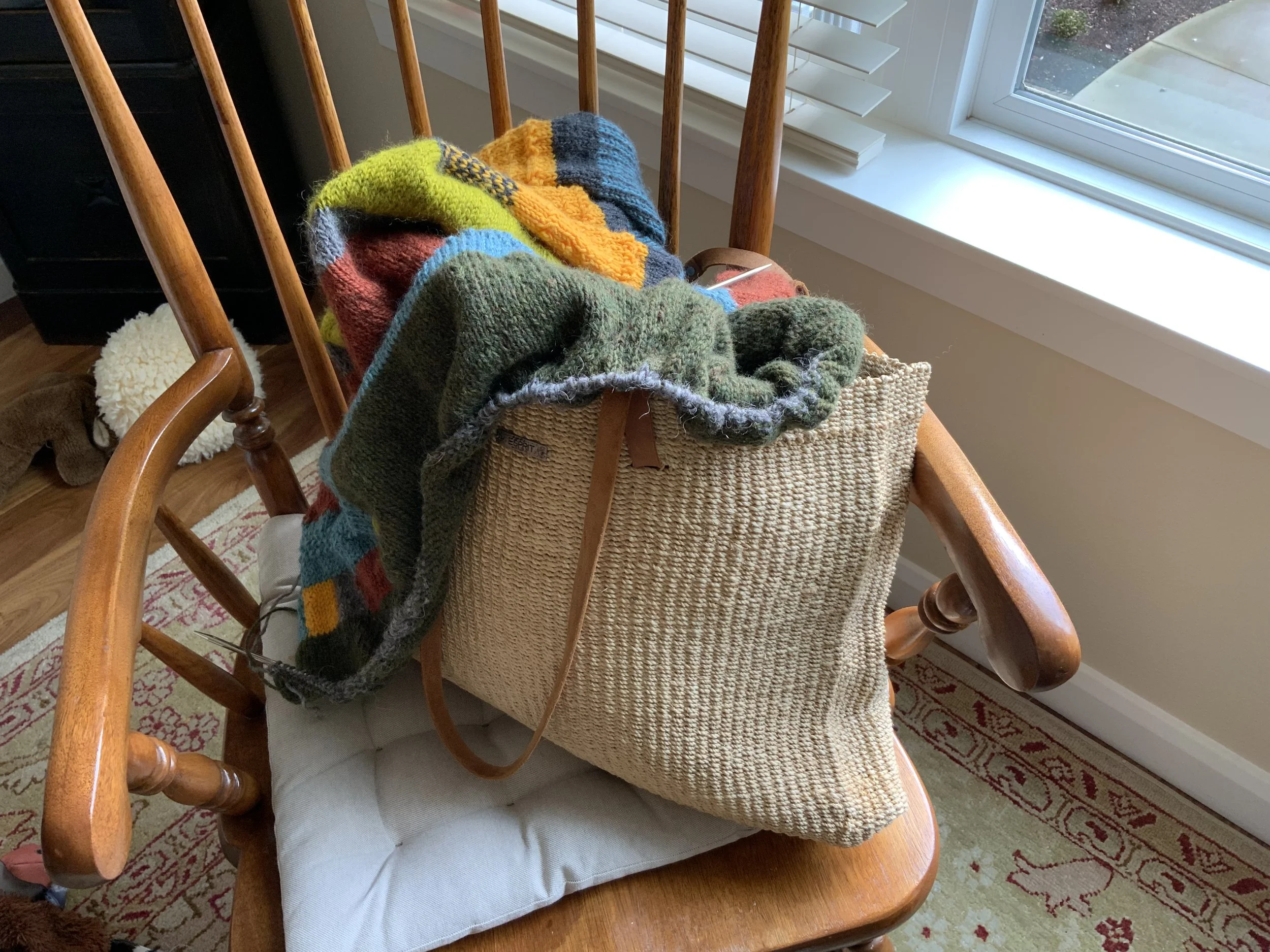
Days after the hanky was in my possession, a few weeks after my bracelet was lost, and days after I stopped constantly thinking about it, feeling sick about it, I reached past the bulk of a blanket I am knitting, down to the bottom of my massive tote bag to retrieve the last of thirteen skeins of wool yarn. I felt something metal. Cold. I don’t think my heart stopped but it might well have, given the punch of emotion slamming into it. My bracelet!
I couldn’t breathe. I couldn’t believe what was in my hand.
I’ve since studied the thing; the words stamped on the bracelet’s identifying link: Sterling. Mex. 1995. Brenda Schoenfeld. Schoenfeld, I learned, was a member of the “legendary Taxco artisan family, famous master silversmiths, the Los Castillo. She died this year in February. She made my bracelet. I would never have bothered learning all this I’m guessing, had I not first lost it; had I not learned by losing, what having meant to me.
Isn’t it that way . . .